CX Thinking

Moving from User Interface Thinking to Customer Experience Thinking

Customer Experience

I designed a process to support customer experience! To move our company towards customer experience design, I implemented the following phases

  • Personas mapped to user journeys and then to services via blueprints
  • The resulting service blueprints story mapped, creating a roadmap for our products
  • Joining it all together with a productive sprint
Persona
Persona

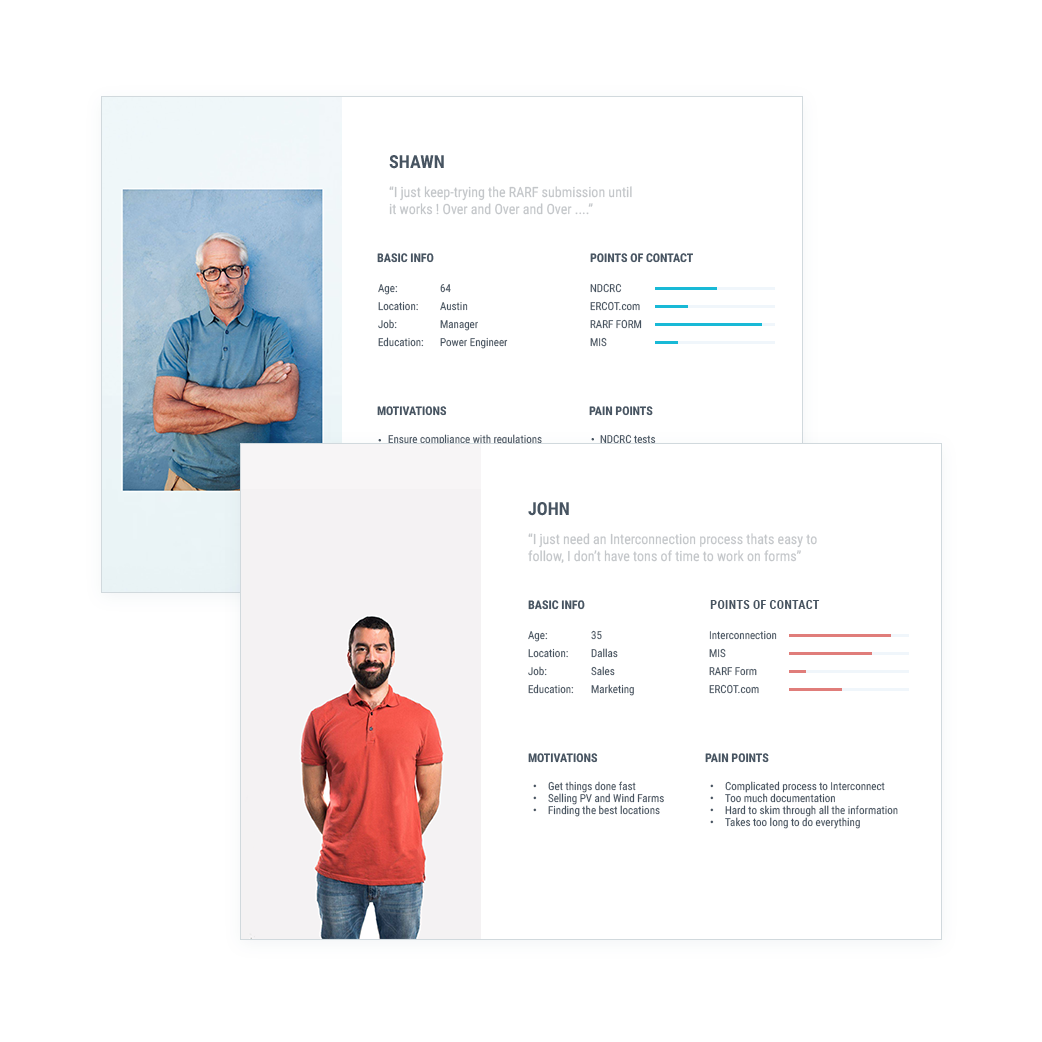
Personas

Getting to know our users!

Based on interviews, the design team set up all of our company personas. Throughout our entire process, we refer to them to bring the user's motivations and needs to our products and services.

  • My design team started with hypothetical personas and then confirmed them through phone and in-person interviews with our users.
  • With our complex set of users, we have 23 personas. We design for both our employees and the market users.
  • Learning more about our market users has educated our employee users. Our employee users now view the market user through the lens of having goals with real-world problems.
  • Each product or project starts by validating the existing persona and updating them.

Journey

Just what is our user's journey!

  • I lead the design team in creating an initial set of journeys for each persona for their prospective product or service.
  • When personas are updated or new features proposed, the design team evaluates the existing journey maps for changes.
  • New products get new journeys.

Journey Map

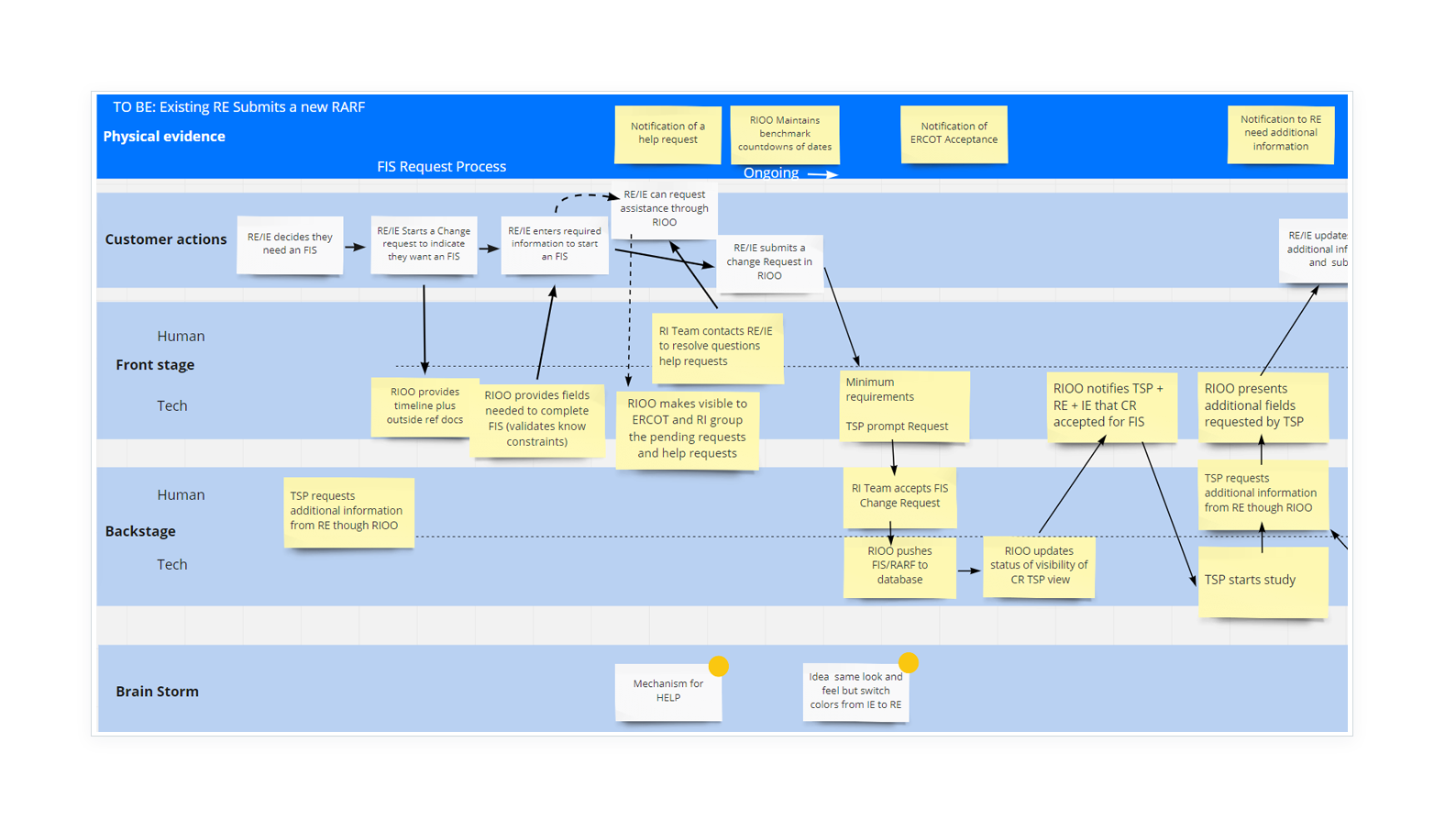
Service Blueprint

How does the user navigate our services

  • I began by orchestrating a workshop to build the initial set of "as-is" and "to-be" our company's services using an outside vendor.
  • We mapped the user's journeys across all the manual and non-manual processes, devices, and departments to create the service blueprints.
  • From the "to-be" service blueprints, the team defines the features and processes to include in the next MVP. As each MPV completes, the team revisits the service blueprint.

Service Blueprint
Story Map Road Map

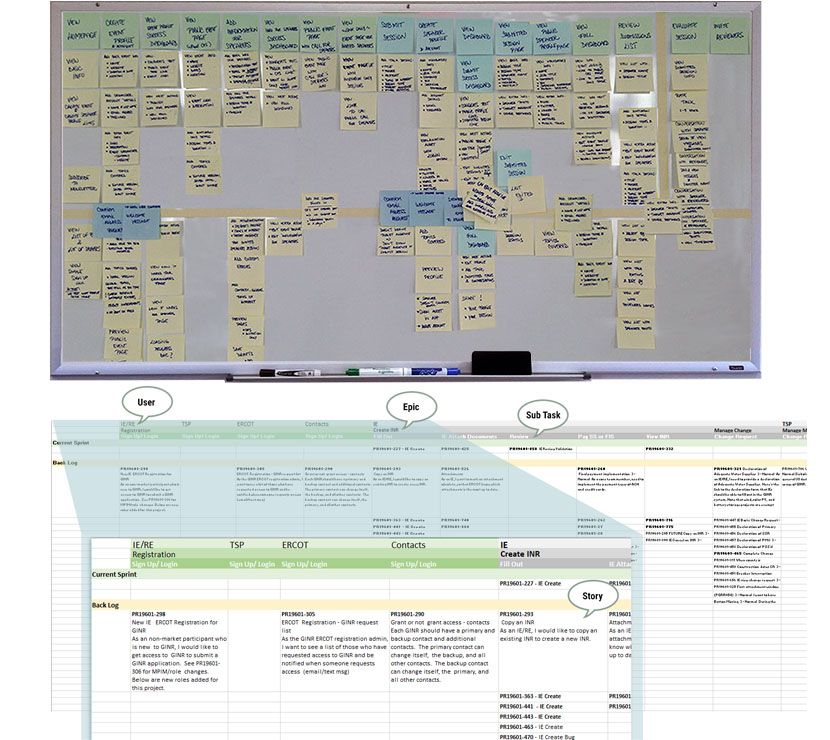
White Board Story Map

Roadmapping for MVP

The chosen stories for MVP are story mapped by the product owner, UX, and critical stakeholders.

The story map is in chronological order by how the users are working through the services. The story map defines the features, gaps, and pain points of the MVP.

I translate the sticky whiteboard into epics, and then tasks, subtasks into stories identified in the blueprint for a working document.

Sprint Timing

Sprints

UX Designers

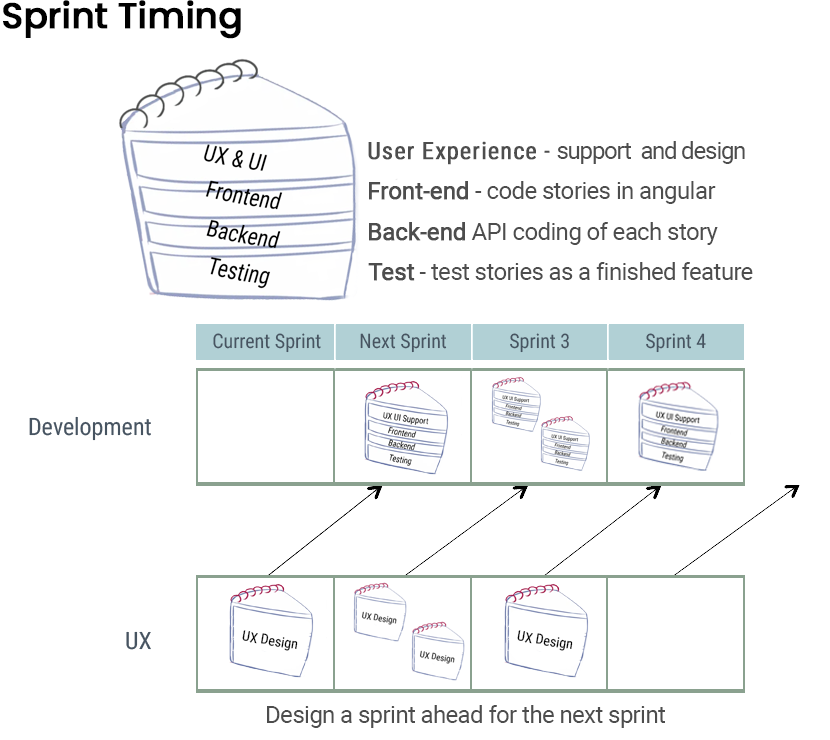
Our UX designers work 1-2 sprints ahead of the development team. The design team splits their time 70 percent on new stories and 30 percent on support.

Our agile team's vertical cake slices, so during the current sprint, designers have their own design stories as well as supporting the development team on questions and reworks.

Current Sprint

  • The first week of the sprint is a design week for the new designs. The designer will work through the necessary UX methods needed to create a paper prototype and do gorilla usability.
  • We kick off the second week with a convergent design review as a final check before a coding effort. In the tool UXPin, we create and document the high-fidelity wireframes. Also, we document or update the user flow and information architecture as necessary.
  • Week three, the design system review takes place evaluating for any new design elements. The next step is to code the wireframe in Bootstrap 4 using the design system. Having the UX designer build the prototype will catch drop pattern problems, alignment, and wayfinding issues. We publish prototypes pages to a production git repository for the development team.

Current Sprint

Continuous Improvement

"My team and I are work In-progress."

Key Takeaways

    Don't wait!
  • Don't have comprehensive research – go with what you have!
  • Have hypothetical vs. real – use the theoretical as an opportunity to verify the real (persona, journey, etc.) later.
  • Ask for and lobby for outside help if you have a small team.

Adopt what works for your team and ideate!